The largest and most populous island of Greece features more traditional villages and mountain ranges. Crete was much less expensive to eat and travel around on, and less touristy than some of the other Greek Islands. While we also traveled via ferry to Mykonos Island, a northern island closer to Athens, I’ll focus this post on Crete 🙂
But first, a moment for the FOOD. Wow, I cannot emphasize enough how incredibly fresh everything is. The climate is so favorable to fruits and vegetables, and being close to the sea yields the freshest seafood you can find.


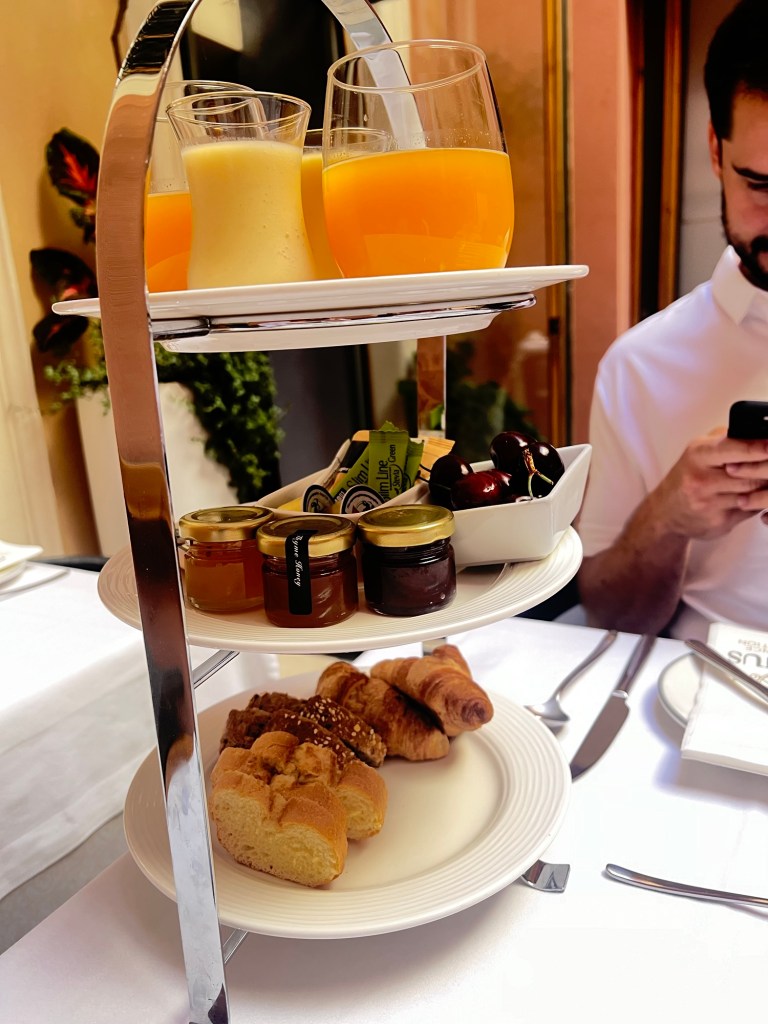


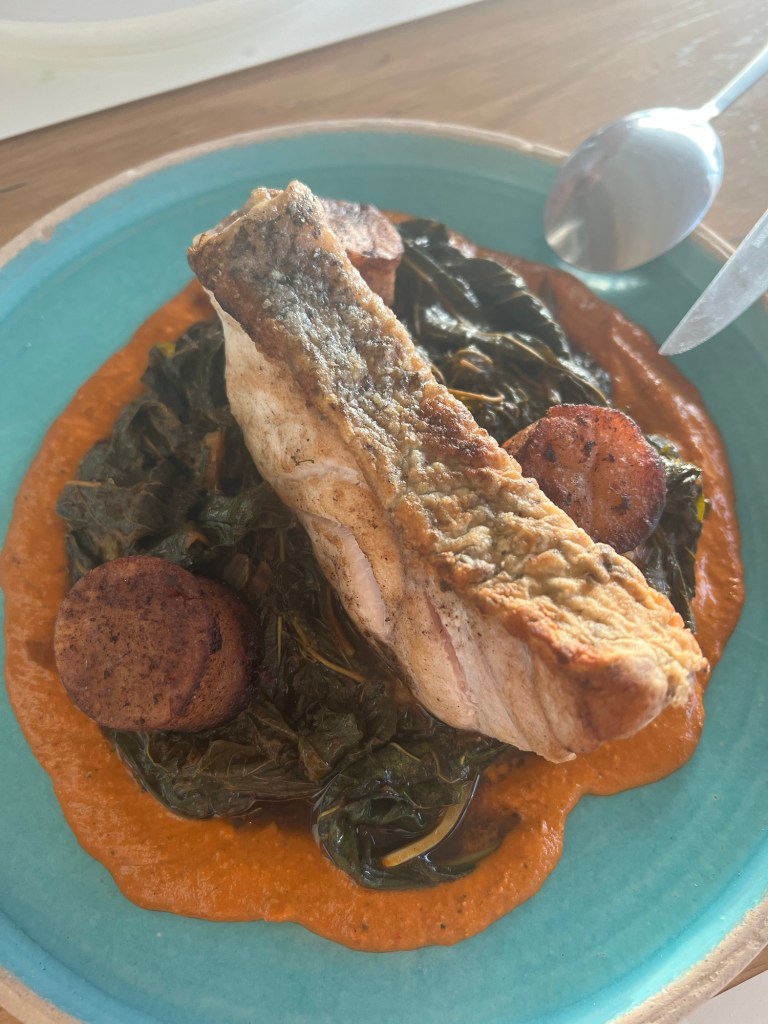
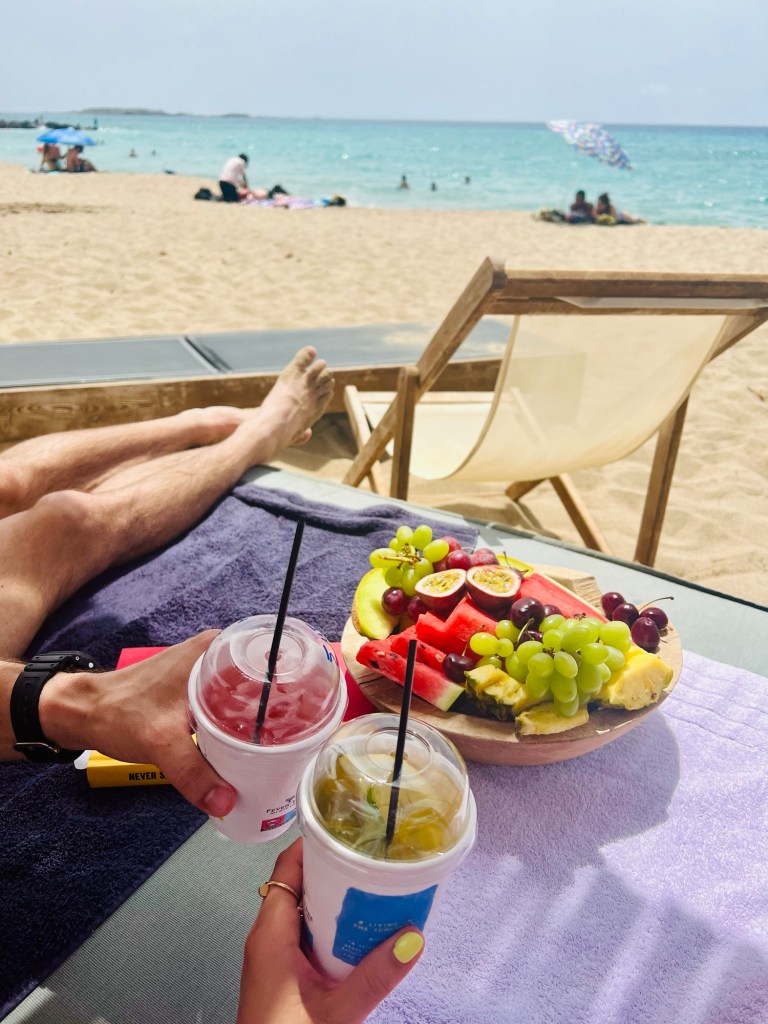
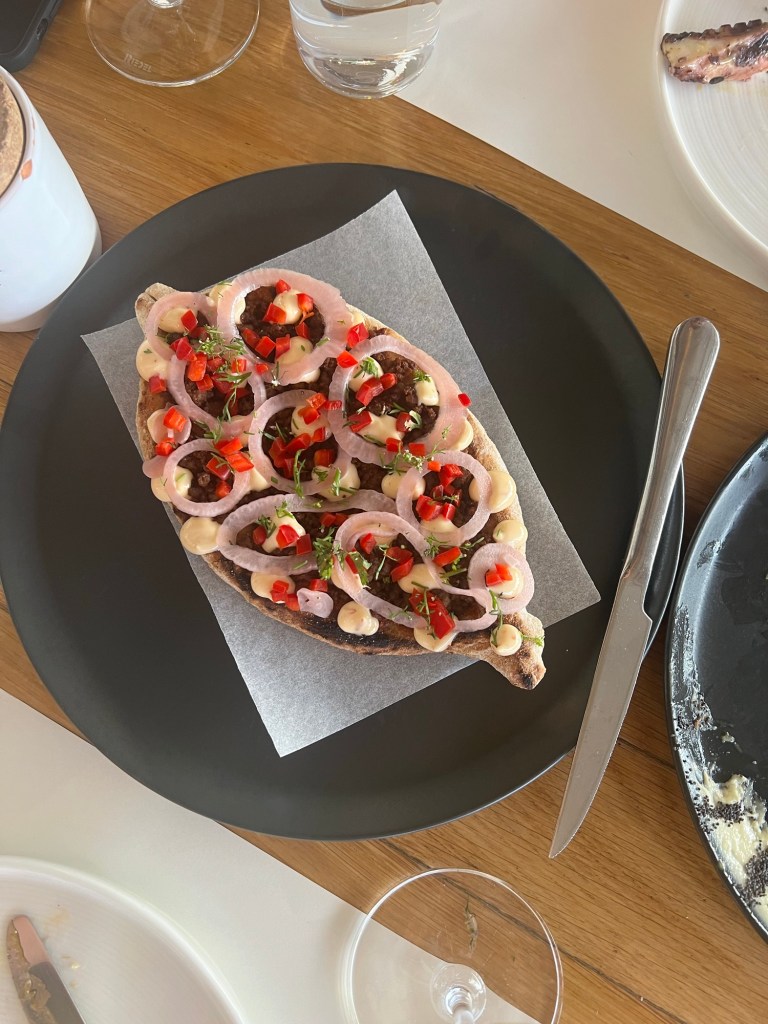

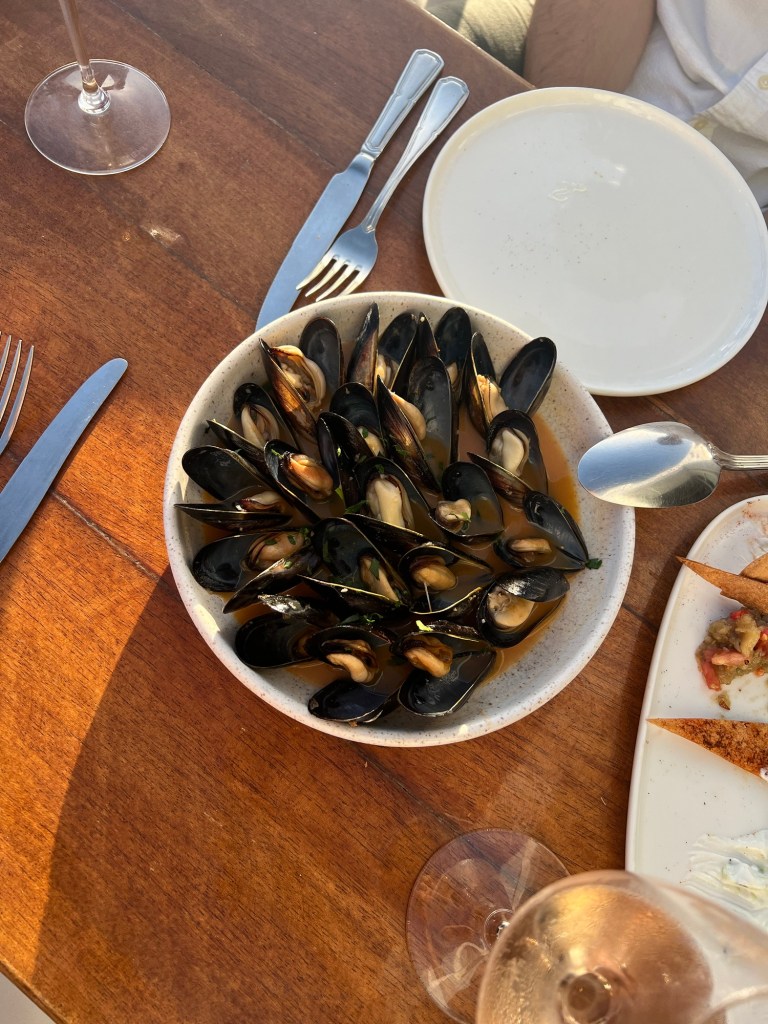

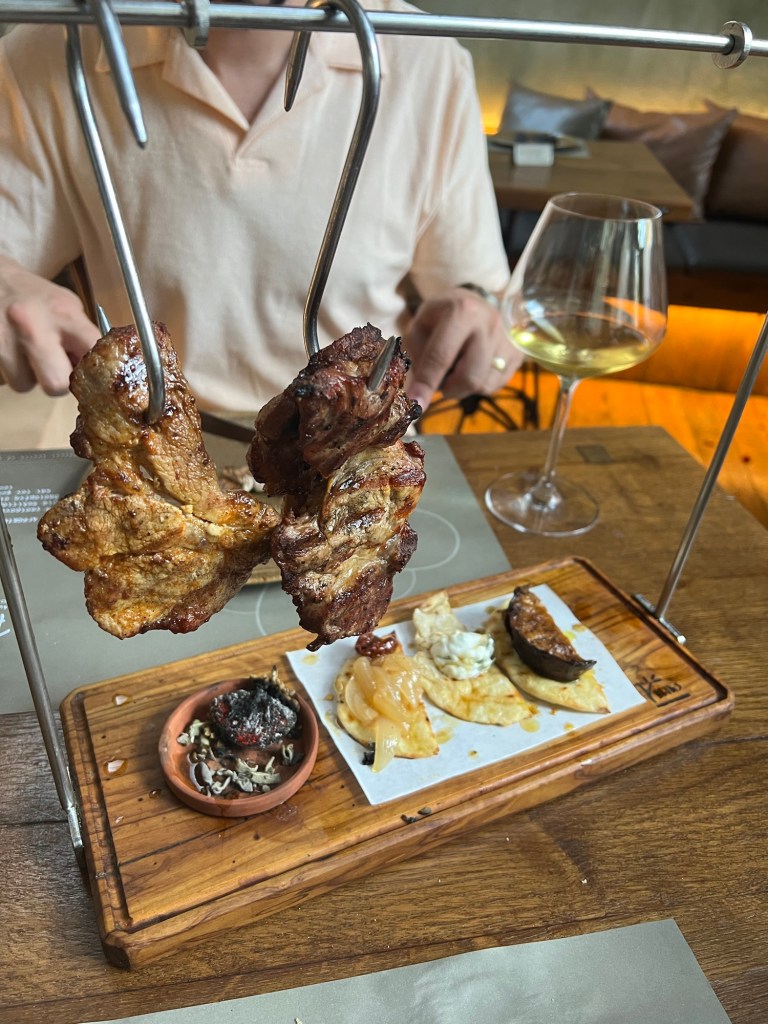
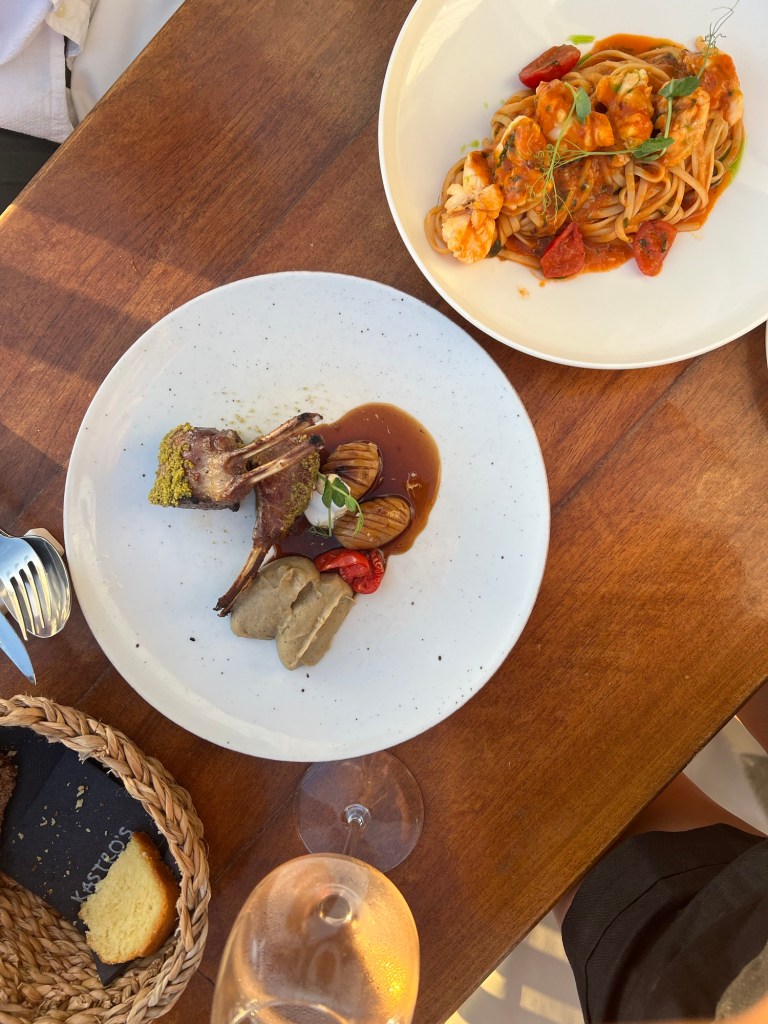

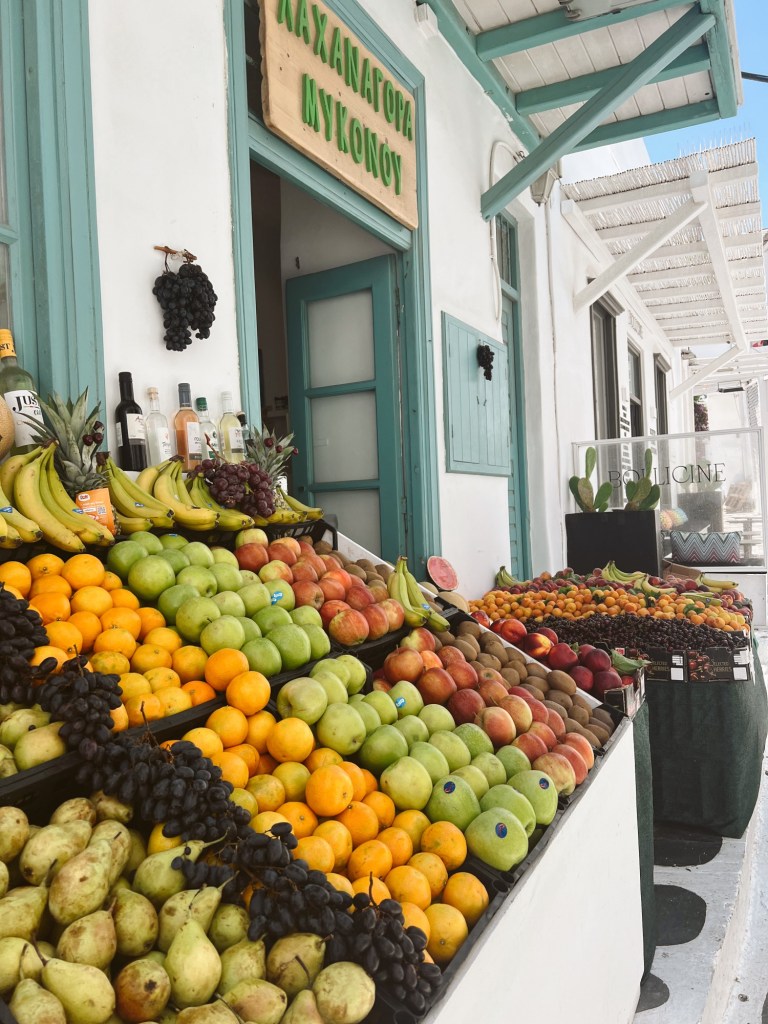


I took close to 50 pictures of the food (not all able to fit on this post!) because each looked more gorgeous than the last. Here are my top picks of food to order on Crete – Kalí óreksi (or bon appetit):
- Greek Salad (a traditional Greek salad features no lettuce – only fresh tomatoes, cucumber, red onion, all sliced under a chunk of feta cheese and drizzled with olive oil). This is a staple across all the Greek islands.
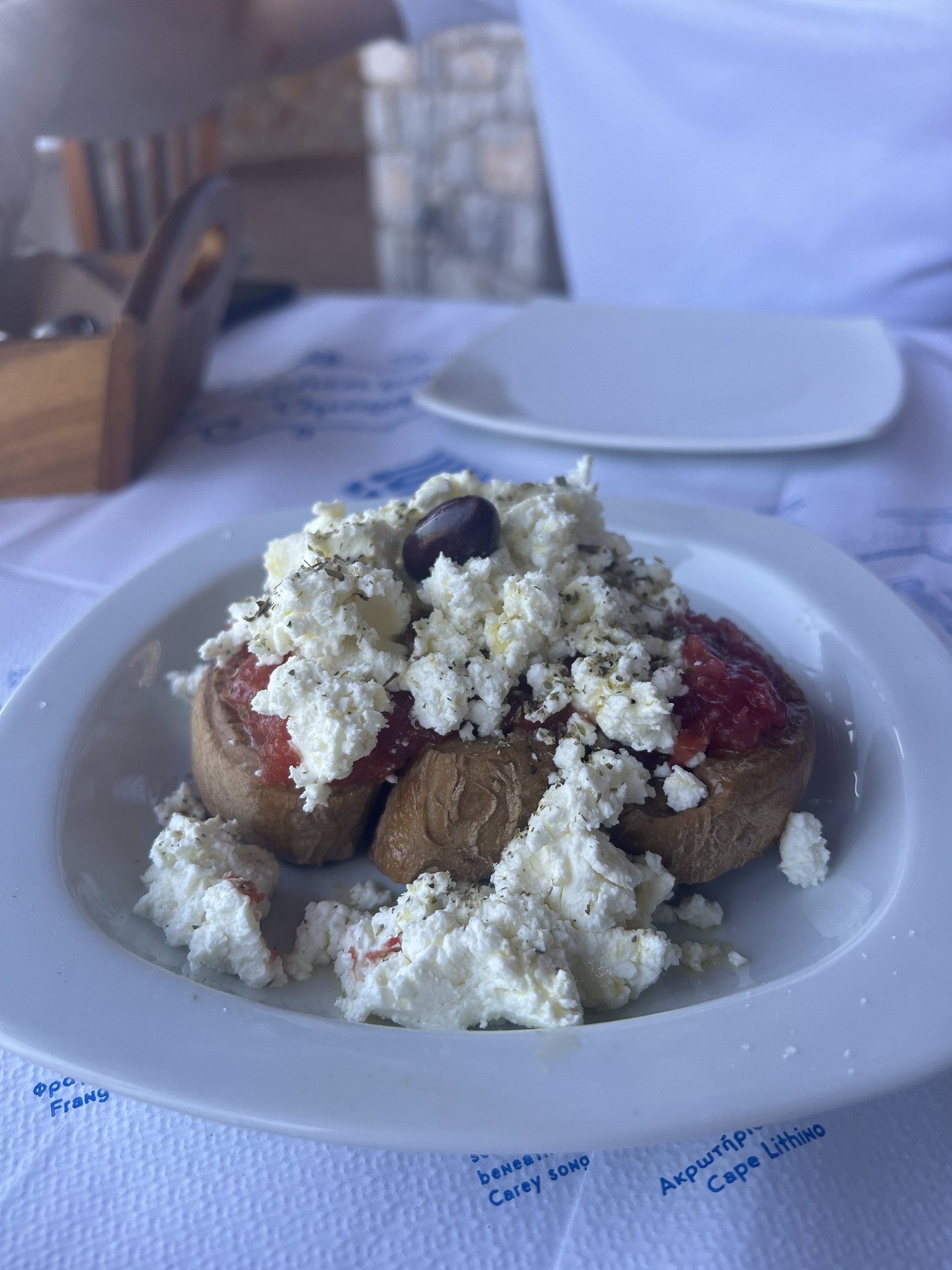
- Cretan Dakos – this is a “Greek Cretan salad” but with, again, no lettuce. Made with Cretan rusks (whole grain barley crispy toast), fresh tomatoes, feta cheese, olive oil and sometimes Kalamata olives.
- Lihnarakia and Kalitsounia – two types of pastries; the first named is sweet and the second listed is savory. Both include traditional Crete cheese!
- Cretan snails (called Kohli Bourbouristi), usually cooked in rosemary and olive oil.
- Fish soup – always get the fish of the day in this case
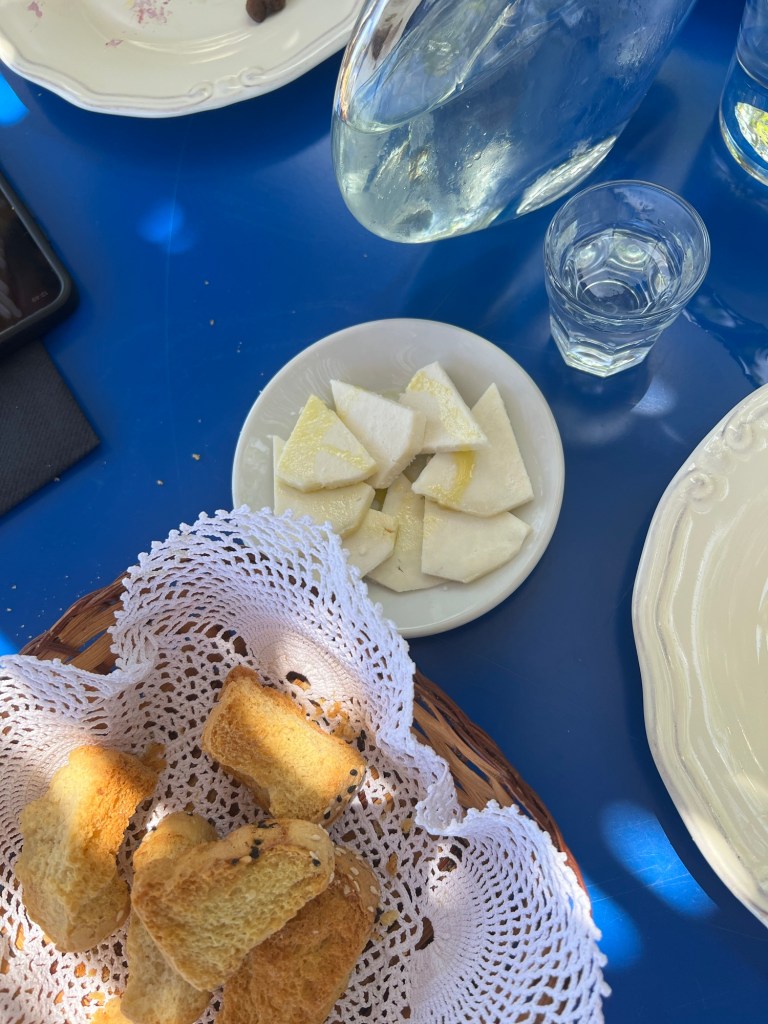
- Cretan mizithra cheese is used in many pastries and appetizers, like the dakos listed above as well as lihnarakia. Fun fact: most cheese is made from sheep and goats, or a combination.
- Traditional raki – the honey version is the BEST. It’s an after-dinner digestiv that is typically served with dessert, like mosaic. *See the top left picture on the grid above! We also had a version that was rose-colored in Heraklion, which was my personal favorite.
We stayed in two of the three main cities on Crete. Renting a car was easier, and highly recommended if you want to see more on the island. Per day, the car rental was only 30 euros (about $33).
CHANIA
Pronounced (Hahn-YAH), is the most popular destination on Crete. There’s a ton to do in this small town, from the Old Town to the modern city, which is the larger area of the city. We stayed in the Old Town (which I highly recommend) at Domus Renier Boutique Hotel. The staff were incredible and helped us make reservations at a few hot spot restaurants in the city.


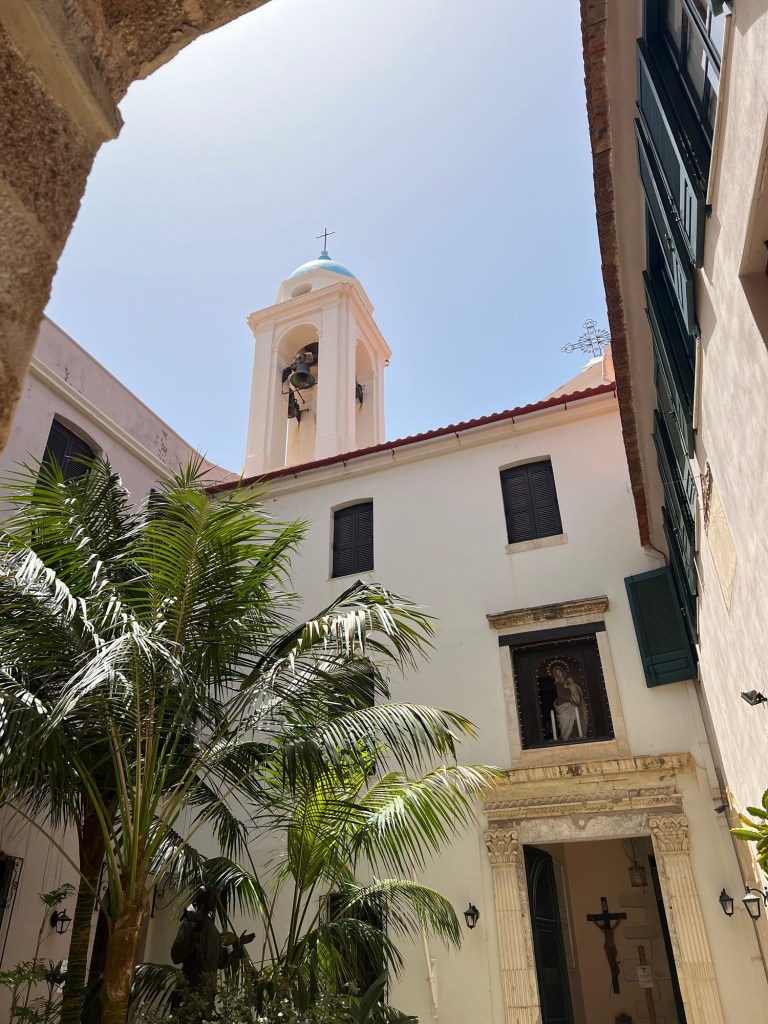



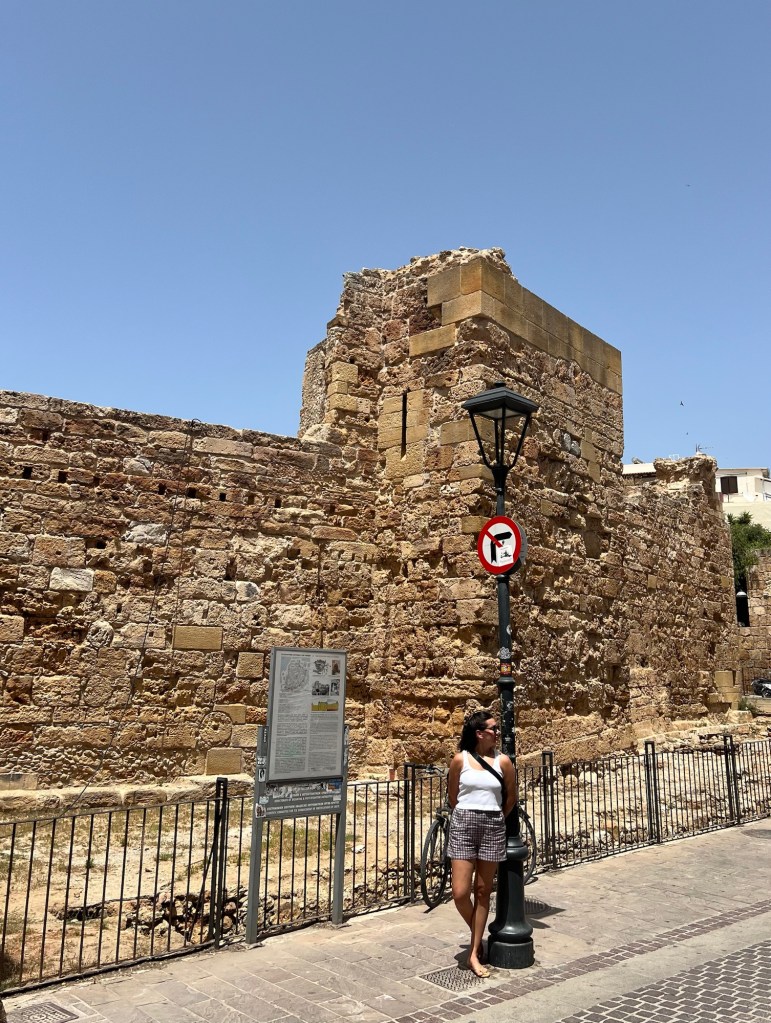
We took a walking tour of the city with a private guide. He showed us some great historical sites, including a mosque and the oldest Christian church in the city, as well as the Byzantine wall pictured above.
Here are the restaurants he recommended. All can be found in the Old Town, walkable in about 10-15 min!
- Tamam
- Salis
- To Antikristo
- To Maridaki
- Kapari
- Glossitses (the best and most creative fish soup)
ELAFONISSI BEACH
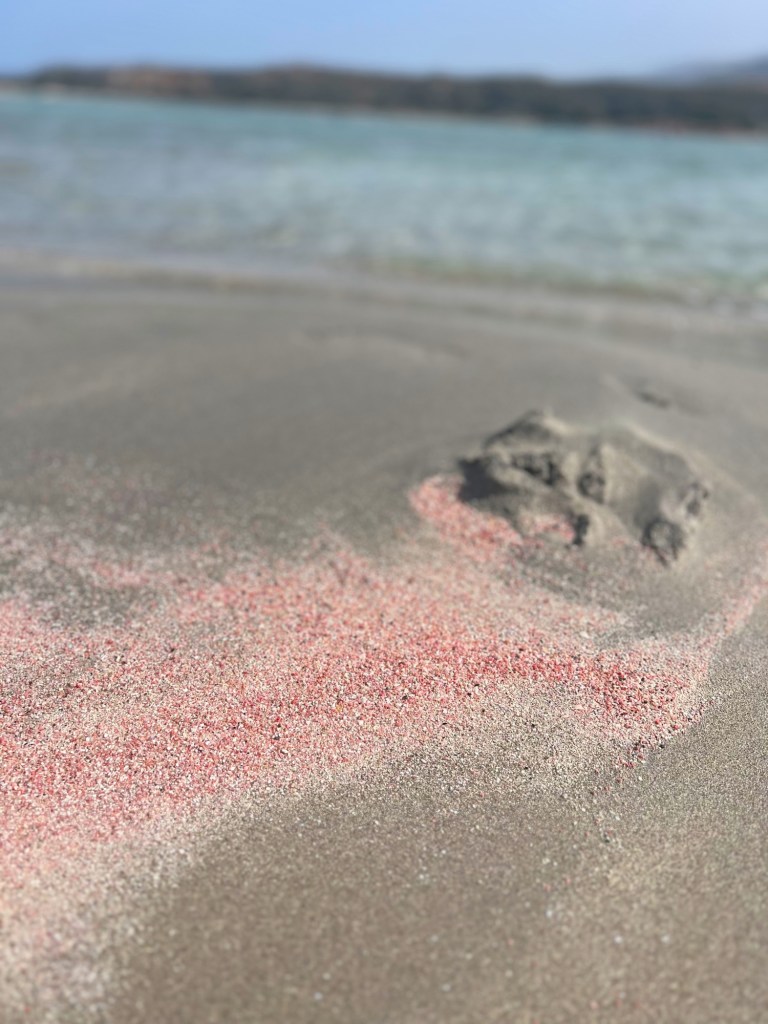
This beach is about a 1 hr 30 min drive from Old Town Chania, known for its pink sand! Unfortunately, it is a tourist hot spot as well. We woke up early to be at the beach by 9 AM for some peaceful pictures before the crowds ruined the vibes! To be honest, the sand was not as pink as I expected. I had hoped for more vibrant colors, but it might have been a timing thing. Around 11 AM, the beach got so crowded, and that’s all it took for us to decide to leave!
I do recommend going to see it, but I think the ideal time would be when we went, or close to sunset. There’s a chance the timing closer to sunset or sunrise would yield more vibrant pictures. Here are some photos I got.

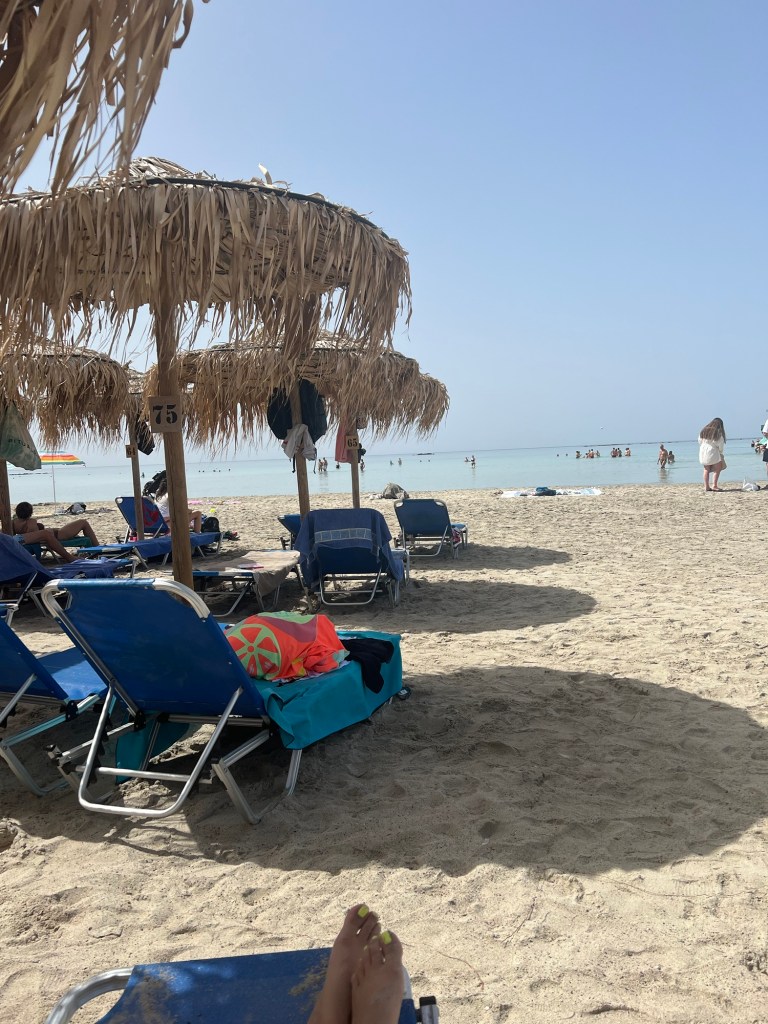
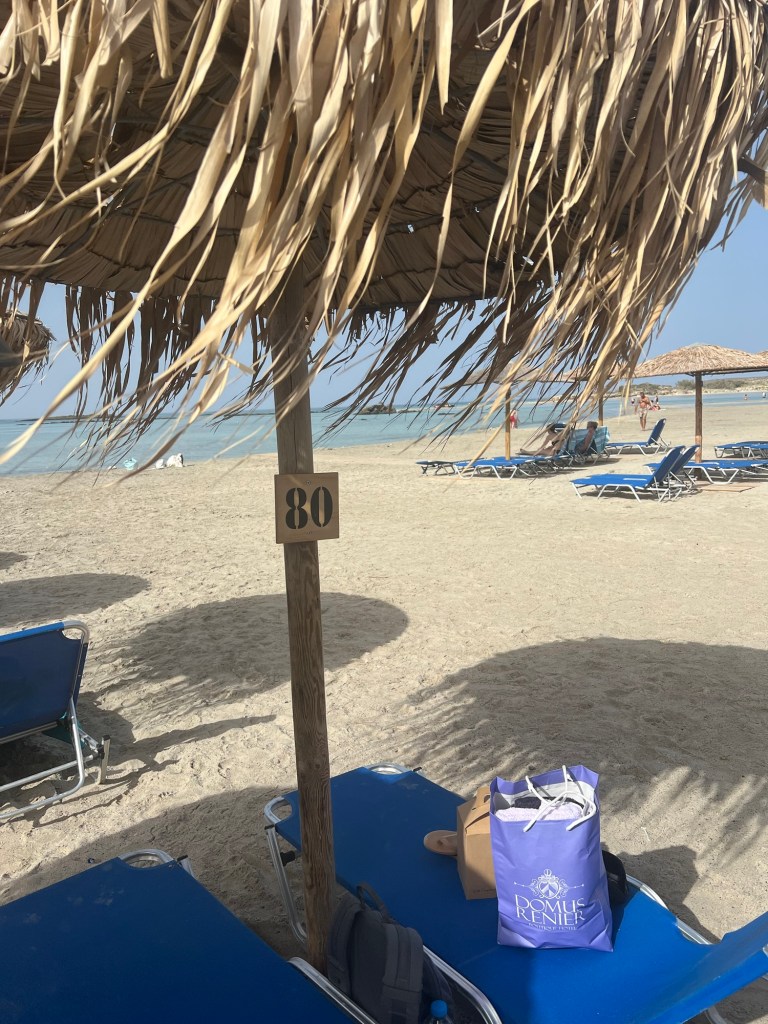
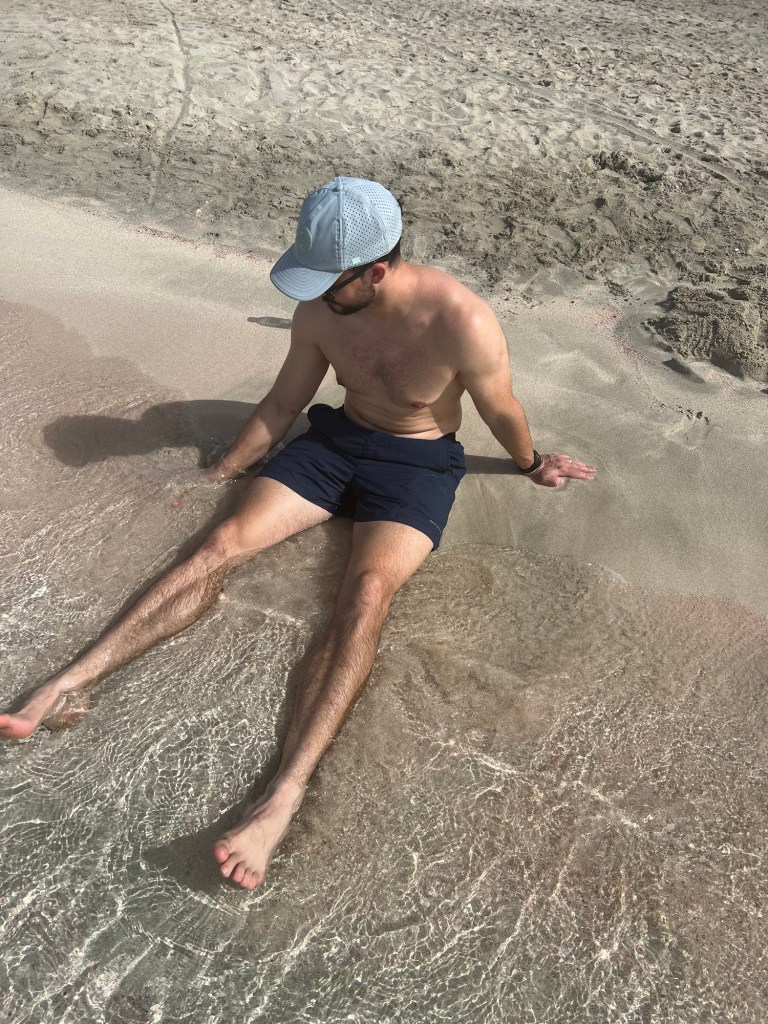


The picture above is what I found on the internet before we went…. Another good reminder that sometimes things you see on the internet are not necessarily accurate depictions!
We took the long way back to stop at another beach, called Falasarna Beach, and I’m so glad we did! This beach was less touristy, and had great cabanas for us to hang at, as well as food/drinks. The name of the beachside bar is Liokalyvo Beach House Taverna Falasarna.


SAMARIA GORGE
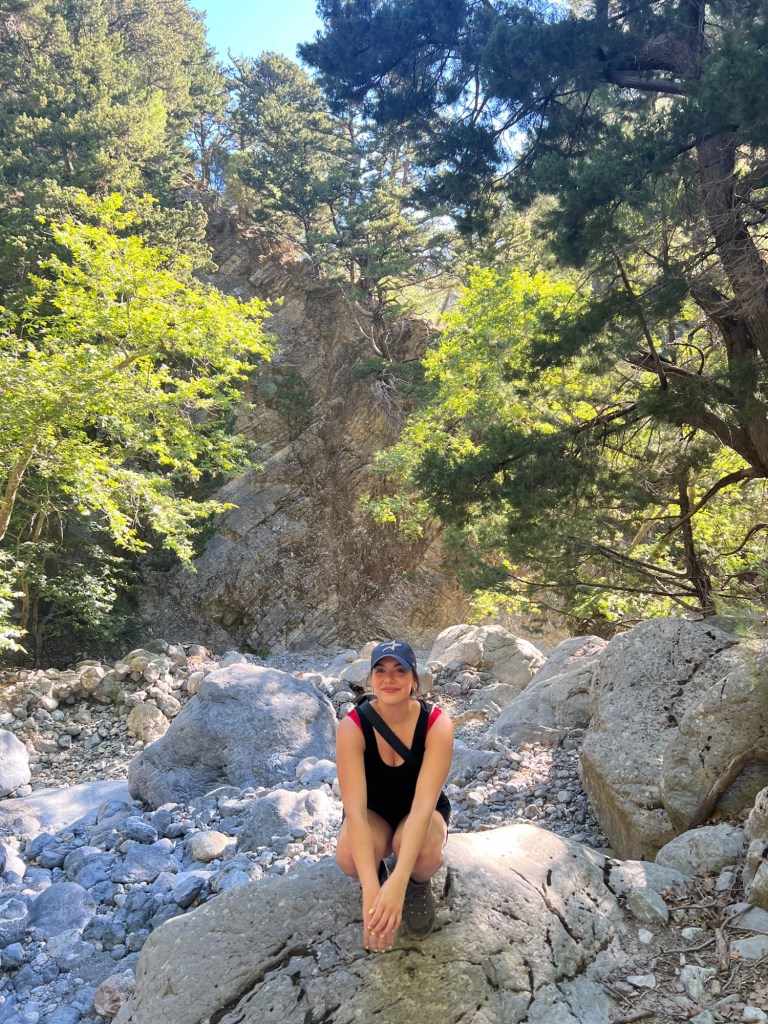
Located in the southwest region of Crete, we opted to do a full-day excursion, doing an 18 km hike (around 11 miles) through the Samariá Gorge. The gorge was created by a small river running between the White Mountains and Mt. Volakias. The actual gorge is about 16 km long, starting at an altitude of 1,250 m at the northern entrance. Although I would have preferred to drive, we bought tickets for a tour bus to drop us off at the gorge entrance, and then pick us up on the other side of the ferry ride. Essentially, we hiked from the top of the gorge, down to the sea, and rode a ferry for 45 min back to a location on the south side of island, where the tour bus picked us back up.
The actual hike took maybe 5 hours, depending on your pace, and the drive to and back were ~2 hrs each. Needless to say, it was a LONG day. We were able to buy lunch and food when we needed, so we did not have to pack lunches. But we did bring water bottles with a filter, and I’m super happy I wore my hiking boots. The hike was mostly downhill for the first 2 hours, then flat the rest of the way to the sea. However, the downhill portion of the hike was extremely rocky, with smooth stones, but all in the shade. The second half of the hike was flat terrain, but the sun was at its most intense heat, with little shade. After the hike, when we reached the ocean, we had an hour or so to swim, and it was heavenly after sweating all day!
While you don’t have to do the whole 18 km hike, there’s no other way to do it without the tour bus. You could drive to the port (Agia Roumeli) and do the easier hike halfway through the gorge starting at the sea, but it would have gotten complicated for us with a rental car.
Fun Facts about the gorge:
- The most famous part of the gorge is the stretch closest to the sea, called the Iron Gates, where the width of the gorge is only 4 km but as high as 300 m (980 ft).
- The village of Samariá lies just inside the gorge. It was finally abandoned by the last remaining inhabitants in 1962 to make way for the park. The village and the gorge take their names from the village’s ancient church, Óssia María!
- The village by the sea is called Agia Roumeli, and only accessible through the gorge hike OR by ferry.



LAKE KOURNAS
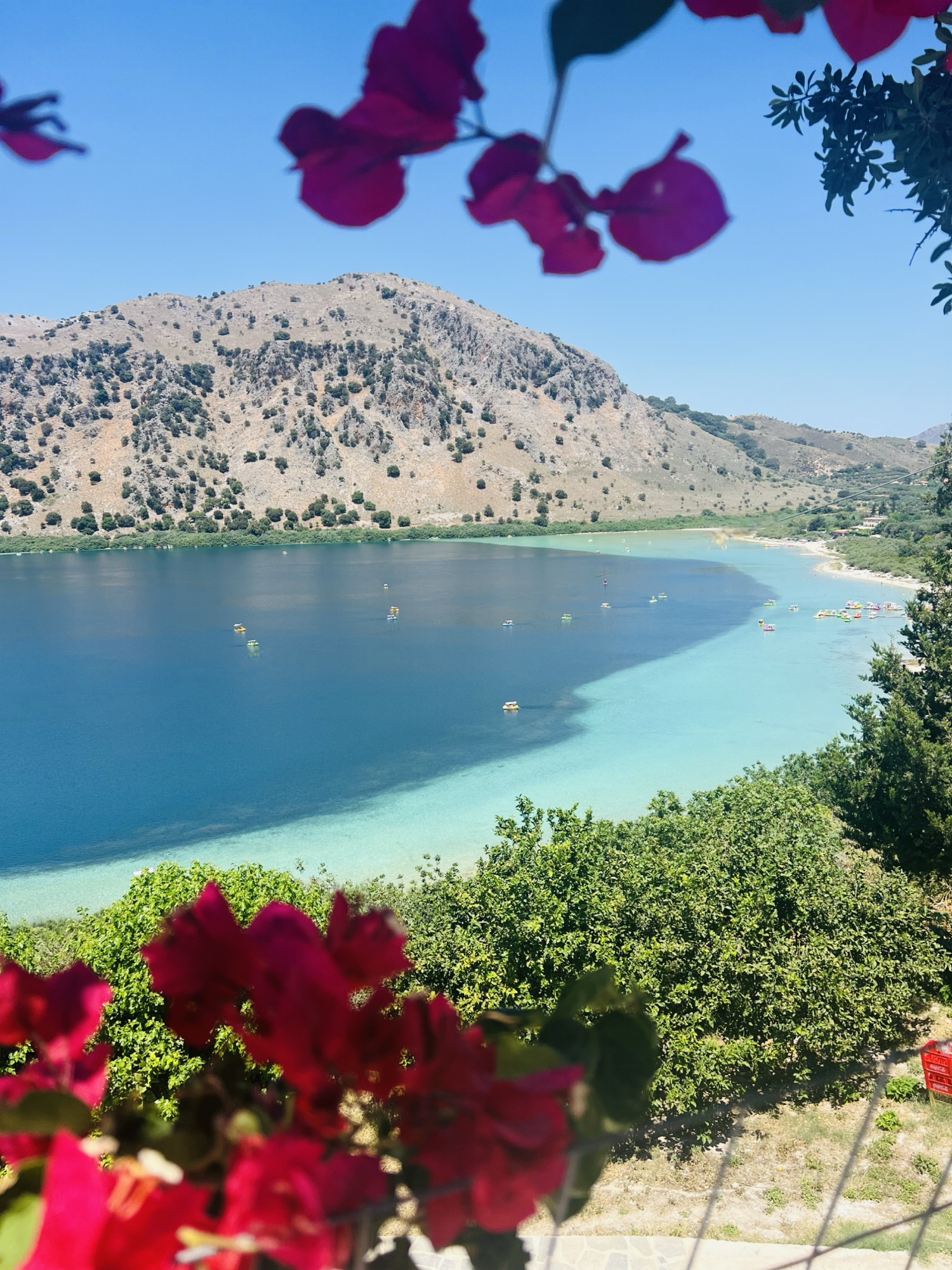
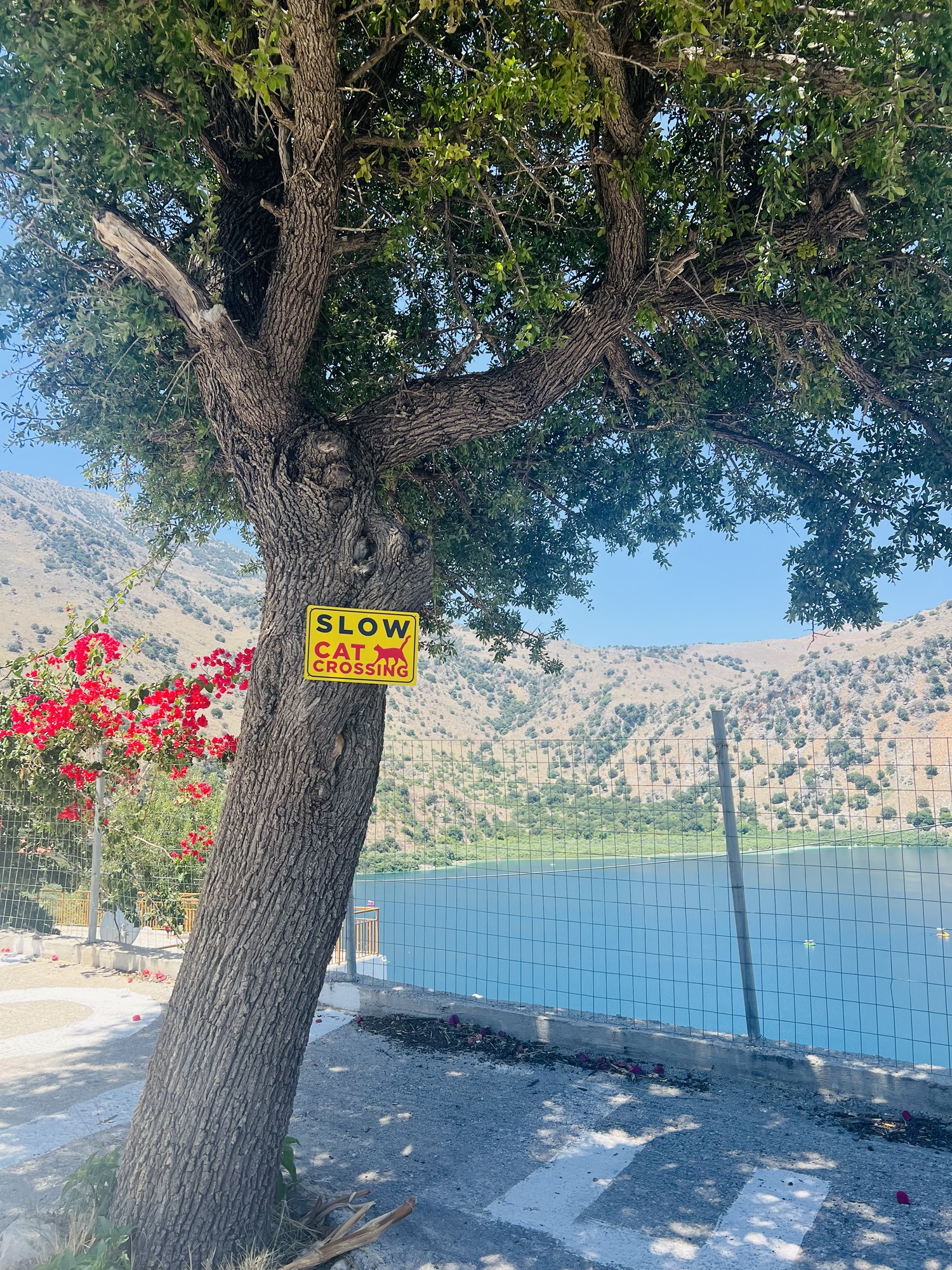
There’s a fun legend associated with this lake – which you must ask a local if you go! I’m not going to spill the beans. 🙂 On our drive from Chania to Heraklion, we stopped at this freshwater lake for some fun and reprieve.
This was my favorite unplanned stop during our time on Crete. We had a great meal at Restaurant AMBROSIA and did some paddling on boats at Neraida Pedal Boats!

HERAKLION
The last city stop in our Crete adventures was my least favorite. I think mainly it was because it was a port, bustling with more modern activity. However, there were great restaurants and shopping! The best part of this city was Peskesi Farm and Restaurant. We went to eat at the restaurant, then were able to tour their farm the next day. We also visited the historical site called the Palace of Knossos, which I will detail next down below 🙂
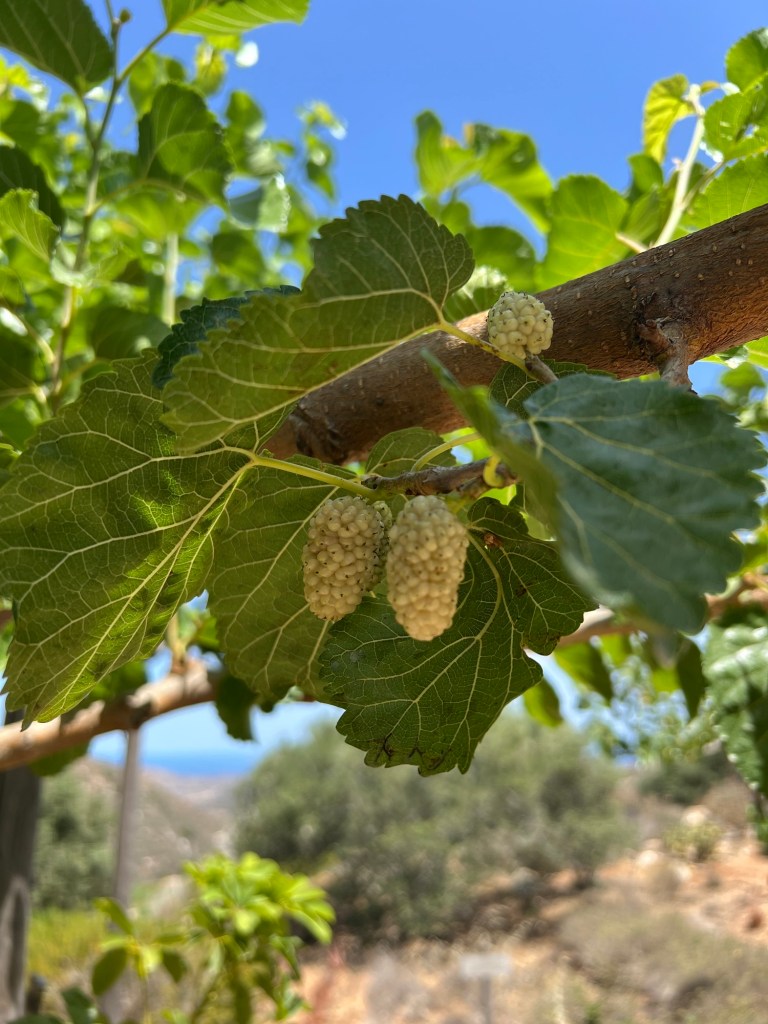
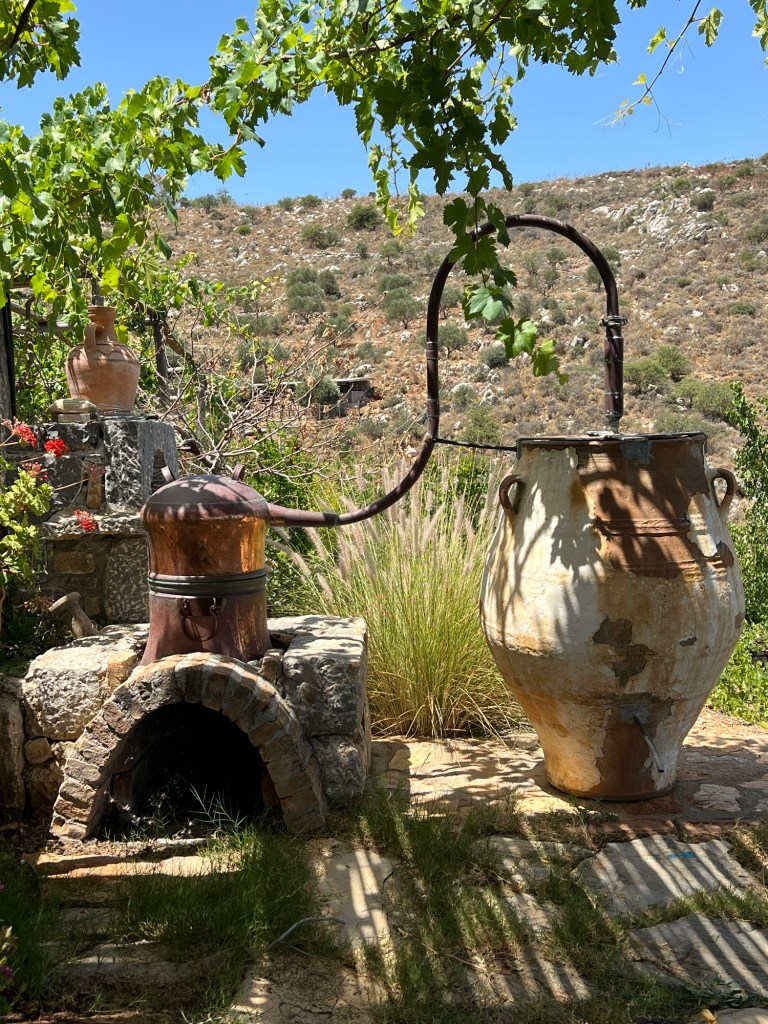
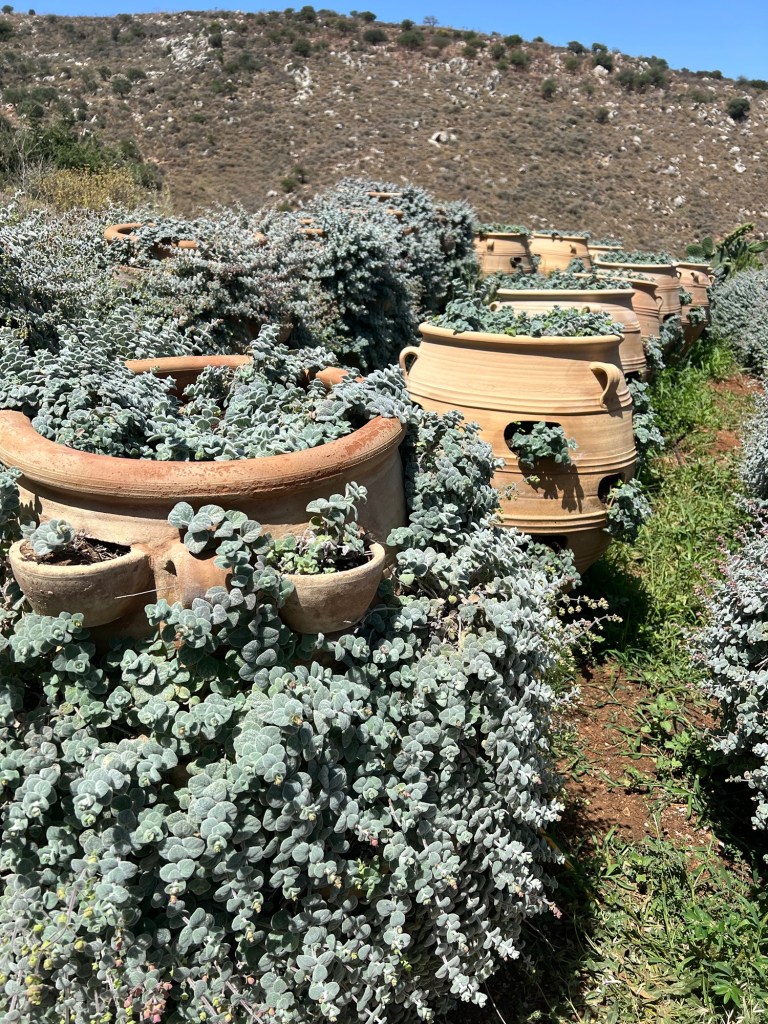
This farm is completely self-sustainable. The entirety of what they make at the restaurant is produced and recycled at their farm. There was a 1000-year-old olive tree, as well as compost area for the leftovers from the restaurant patrons. We tried the Cretan snails here (which were delicious!!) as well as had some traditional Cretan meze. Essentially, meze is appetizers comprised of olives, cheese, and cabbage. The rose-colored raki was the highlight of the meal at Peskesi Restaurant!




PALACE OF KNOSSOS
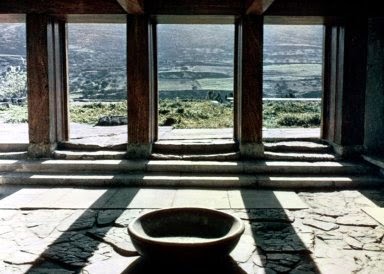
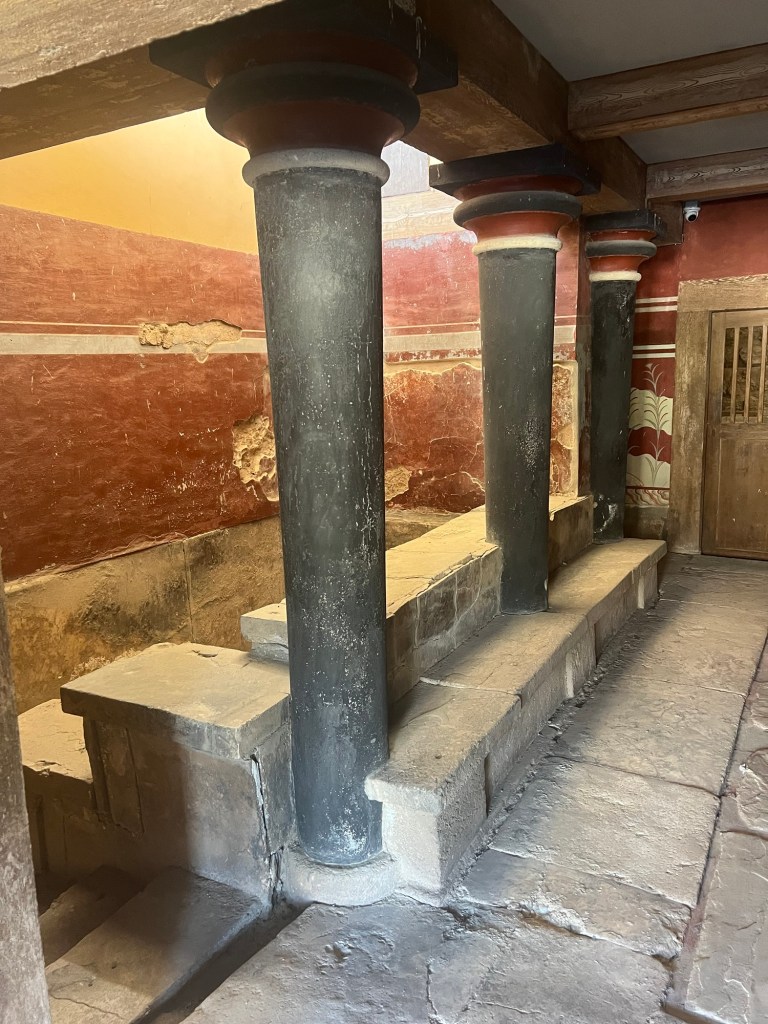
This site was the major center of the Minoan civilization and known for its association with the Greek myth Theseus and the minotaur. Interestingly enough, I learned this site served as a religious and administrative center rather than a royal residence.
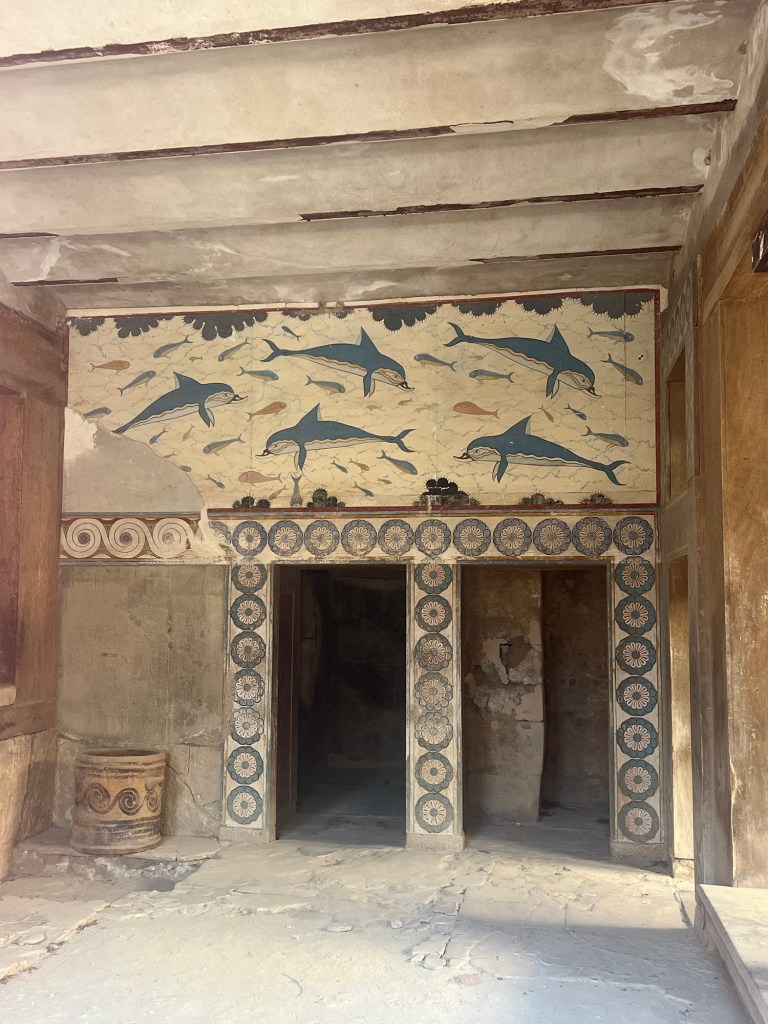
The sign of a double axe (also called labrys – see pic below) was found engraved everywhere in this palace and gave birth to the labyrinth legend of Theseus and the minotaur. You can find the story here, along with some more historical information on the palace. The building was quite massive and impressive for its time. You can find brightly colored paintings, called frescoes, as well as aqueducts managing water transport from 10 km away.
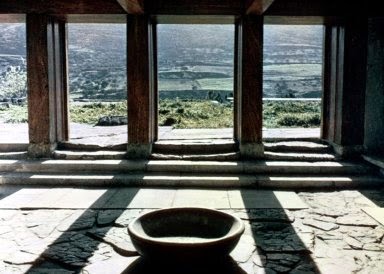
Elaborate throne rooms and changing rooms demonstrated the palace’s use for religious purposes. The throne room’s antechamber has four entrances, which, if looking out from the right vantage point, can depict which equinox it is (see the middle picture below). This helped the people know when harvest was for each crop. Massive vases and containers were used as storage for food items to trade with Egypt and other surrounding civilizations during its time.






Hope you enjoyed my Crete recap, and maybe learned something new! There’s always the appeal of islands like Mykonos and Santorini, which have the iconic blue and white-washed walls and gorgeous sunsets. But I’m finding I love adventuring in lesser-known places with a little more history and a little fewer people 🙂 xo
 Aspire Higher
Leave a comment